
Drium Nan Linntean

Scotland’s first ecomuseum – a ridge of ages
On the Isle of Skye, landscapes carry stories that stretch across millennia — from ancient geology and Norse settlement to Gaelic folklore and crofting culture. The Druim nan Linntean project, part of the wider Skye Ecomuseum initiative, set out to celebrate these stories by creating interpretation along a linear route across north Skye. The aim was to help visitors engage more deeply with the land itself, encouraging exploration beyond the island’s most famous landmarks and supporting sustainable tourism.
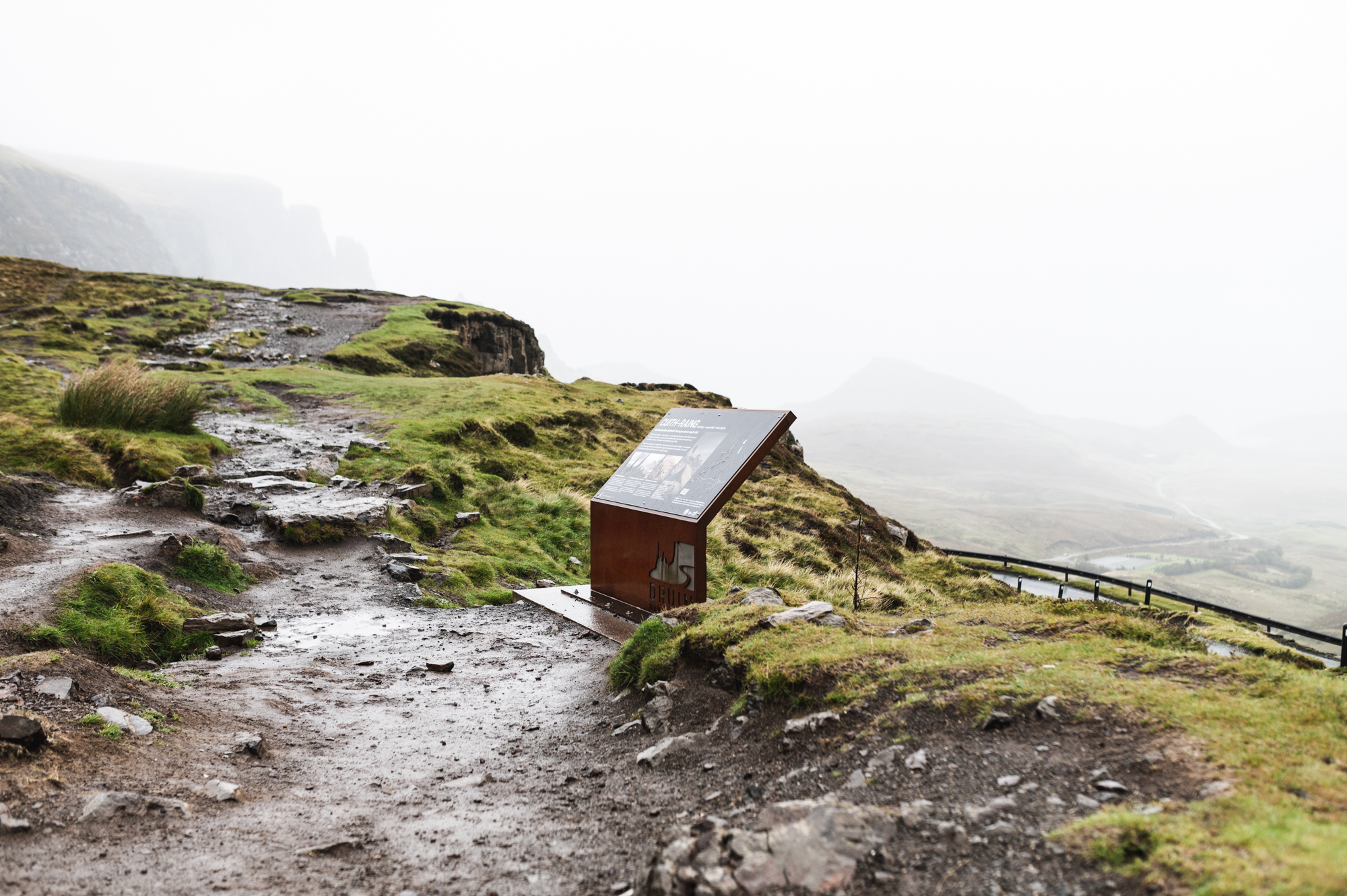
Working with the Staffin Community Trust and partners, we gathered local knowledge, historical research, and ecological insight. Community voices were central: crofters, storytellers, and archaeologists all contributed perspectives on what makes this landscape unique. This collaborative process provided the narrative foundation for a new kind of museum — one without walls, where the environment itself becomes the exhibition.
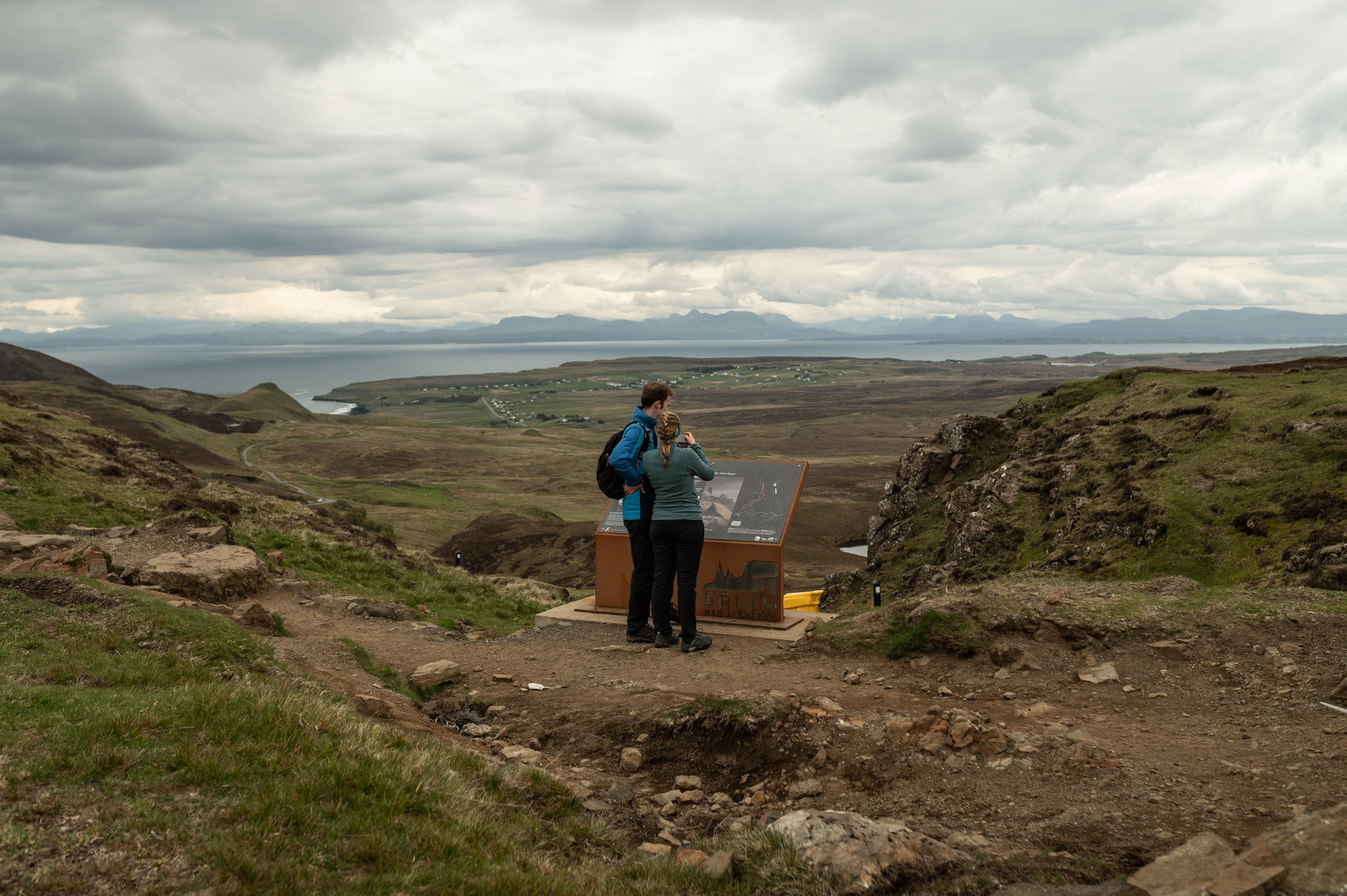
Our design response needed to balance clarity, durability, and sensitivity to place. We developed a series of interpretation panels sited at key viewpoints along the trail. Each combined bold contemporary graphics with corten steel frames, chosen for their weathered patina and ability to sit comfortably within Skye’s rugged environment.
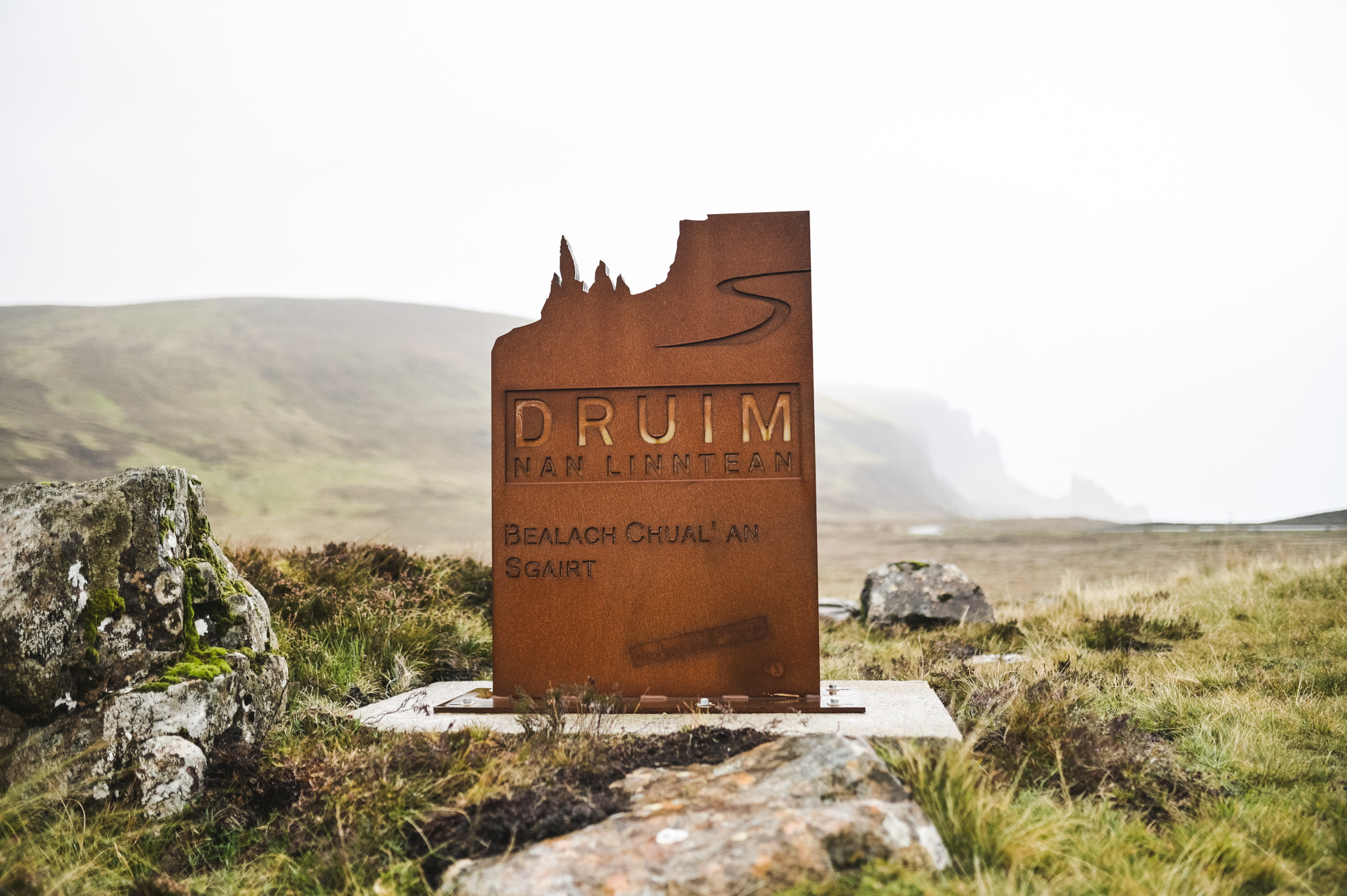
The visual language drew from Gaelic culture and the layered histories of the island, weaving together text, illustration, and photography. Importantly, each panel was designed not as a static monument, but as an invitation — encouraging walkers to look outward at the land, to notice details in the terrain, and to connect with stories embedded in place. The designs ensured accessibility for diverse audiences while retaining a distinct, rooted aesthetic.
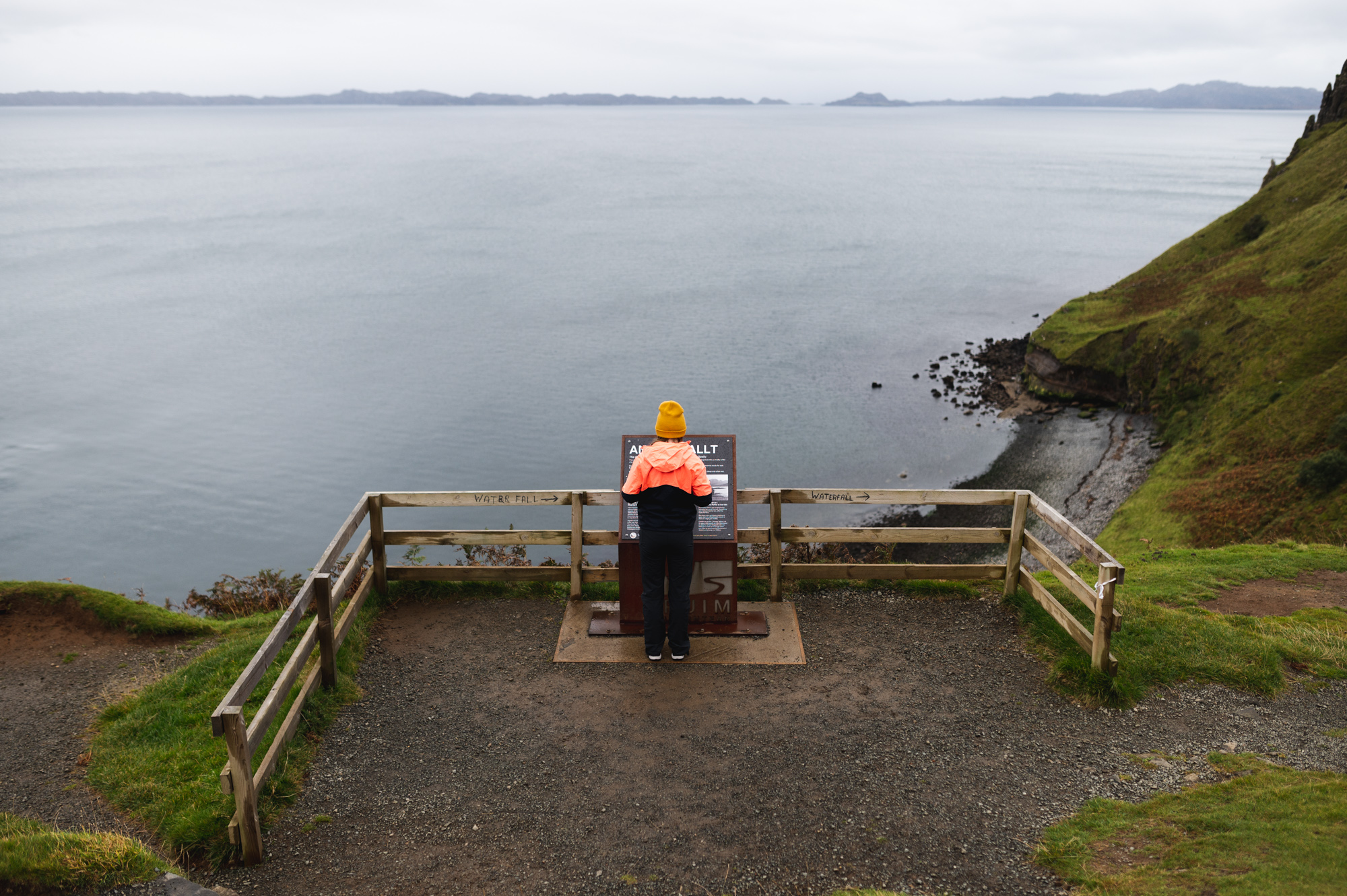
The completed interpretation trail transformed Druim nan Linntean into a living outdoor gallery. From dramatic sea cliffs to inland lochans, each panel frames the landscape as both backdrop and subject. Visitors encounter stories of ancient volcanoes, Viking voyages, clan histories, and crofting practices, all while standing within the landscapes being described.
By grounding interpretation in community knowledge and embedding design within the environment, the project offers a sustainable, slow form of tourism. Druim nan Linntean demonstrates how design can help rural communities share their heritage on their own terms, creating experiences that are authentic, memorable, and deeply connected to place.
“Long may it continue and more find out about it – in the world of diminishing physical activity, it’s a fantastic way to get people to move, and think about where they are at the same time.”
Participant in the Skye Ecomuseum evaluation